
At the heart of the snap general election campaign this year is every political party’s vision on Brexit, but I can’t help but see – or not see – one glaring element that has been secluded from the election. Diverse representation.
During the Brexit campaign a number of pledges were made about “taking back control of our borders” or other passive aggressive one-liners which sought to divide our thriving multi-cultural communities. With all this in mind, why hasn’t this focus on migrants in our country been a focal point for our political parties when fielding candidates?
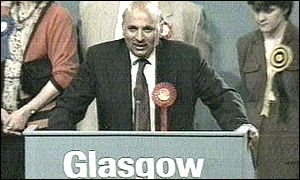
Across the four main Westminster political parties, BAME (Black, Asian and Minority Ethnic) candidates are almost non-existent in Scotland. Where candidates have been selected from a minority ethnic background, they are almost certainly not expected to succeed. Scotland made history in 1997 by electing its first ethnic minority Member of Parliament. Since then only two other BAME members have been elected in Scotland’s history, where the latter of the two lost her seat in 2017. The scale of exclusion of diverse candidates in Scotland may be seen as a minor detail to some, however it sharply focuses the lack of traction Scottish society has made in ensuring that the political landscape effectively represents the communities we live in.
To put facts into context, ethnic minority representation for the Westminster seats in Scotland is currently worse than what it was in the 20th century.
As an extension to these failings, there is very much a lack of female representation although political parties have made pledges to encourage gender balance. Four out of five party leaders in Scotland have signed up to the “Women 50:50” campaign for at least 50% representation of women in our parliament, in councils and on public boards. There hardly is a requirement to double check if any party has actually produced a gender balanced candidate list this election as diversity of that scale would definitely have been used a political baton to beat rival parties with during the debates. And as this did not happen, or diversity was not lauded as a success within any one political party then all parties will choose to remain silent in fear that they may be held accountable for their truly abysmal track records in implementing their diversity pledges.
At the end of this Brexit saga that has both simultaneously alienated and engaged the electorate, my hope is that women and minority groups will take a look around and decide that they can represent themselves better. A second hope is that the political parties who have signed their diversity pledges are held to account and choose to champion these emboldened groups who require much more support. And lastly, for whatever group of Scottish MPs is elected this December I hope that much more can be achieved in ensuring that all Scots are made to feel welcome in their home – even if we all can’t be represented this election.
This article was originally published in the Scots Independent (Dec 2019)
 Cllr Junaid Ashraf